From Garden Gnomes to Hobs: Little People in Lincolnshire Folklore
- Annette@Ostara

- Mar 29
- 3 min read
Updated: Mar 30
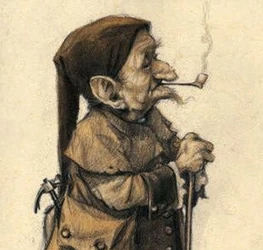
Hobs in Lincolnshire's Lincolnshire Folklore
As a nature and gardening lover, I was intrigued to hear that the Royal Horticultural Society (RHS) has lifted its ban on gnomes in show gardens—a decision reportedly influenced by King Charles. Love them or loathe them, gnomes are firmly embedded in gardening culture, and the news set me wondering about their deeper history. I soon discovered that gnomes, both as mythical beings and as garden ornaments, have European origins rather than roots in the British Isles. Britain, however, has never been short of its own “little people”. Our folklore is rich with goblins, pixies, knockers, and brownies—creatures that share similarities with gnomes, even if they go by different names.
Hobs of Yorkshire and Lincolnshire
With a particular interest in Lincolnshire folklore, I decided to dig a little deeper. That was when I came across hobs, figures found in both Yorkshire and Lincolnshire traditions.
Hobs were often described as small, hairy, wizened men who lived in caves, hills, or farm buildings. Much like other helpful household spirits, they were said to emerge at night, quietly assisting with tasks such as haymaking while humans slept.
Their presence lingers not only in legend but also in the landscape itself. Place names offer tantalising clues. Lincolnshire parish records mention Hob Hill, referring to a field or raised area in the Wolds, while another Hob Hill can be found near Howden. There is also a Hob Lane in Beverley and another in Holderness, suggesting that belief in hobs was once widespread.
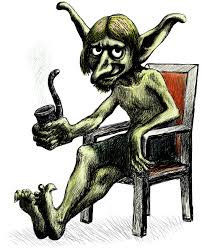
Hob Trush, Hob Thrush, and Hob Thrust
Variations of the name appear across the region. In North Yorkshire, near Northallerton, there is Hob Trush Cave, while Hobthrush Rook lies in the heart of the Yorkshire Moors. I also came across references to hob thrushes, a name that may be linked to “threshing”, hinting again at their association with farm work. One of the most vivid local tales comes from East Halton, where the legend of a hob thrust was recorded. Much like a goblin, this creature was said to live in a farmhouse, helping out during the night.
The story goes that one morning a farmer rose early to shear his sheep, only to find that the task had already been completed. When he later encountered the hob thrust in the barn, he was so grateful that he promised to give him a new linen shirt every New Year, as long as the nightly help continued.
This arrangement lasted for several years—until one year the farmer tried to cut corners and offered a shirt made of sackcloth instead. This, unsurprisingly, proved to be a grave mistake. The hob thrust sang out:
“Thrift may go, bad luck may stay”
And, needless to say, the farm soon fell into decline.
Hob Holes and Haunted Landscapes
Across the fenlands and carrs, stories of little people persist, and places containing “hob” in their name often refer to small hollows, pits, or boggy areas associated with hob spirits. Hob holes are typically coastal caves or hollows in moorland, and over the centuries there have been many reports of small figures vanishing into these places. Folklore warns that such spots are best avoided—reminders of a time when the landscape itself was thought to be alive with unseen inhabitants, quietly shaping both fortune and misfortune.
Image links:


Comments